


Volcano
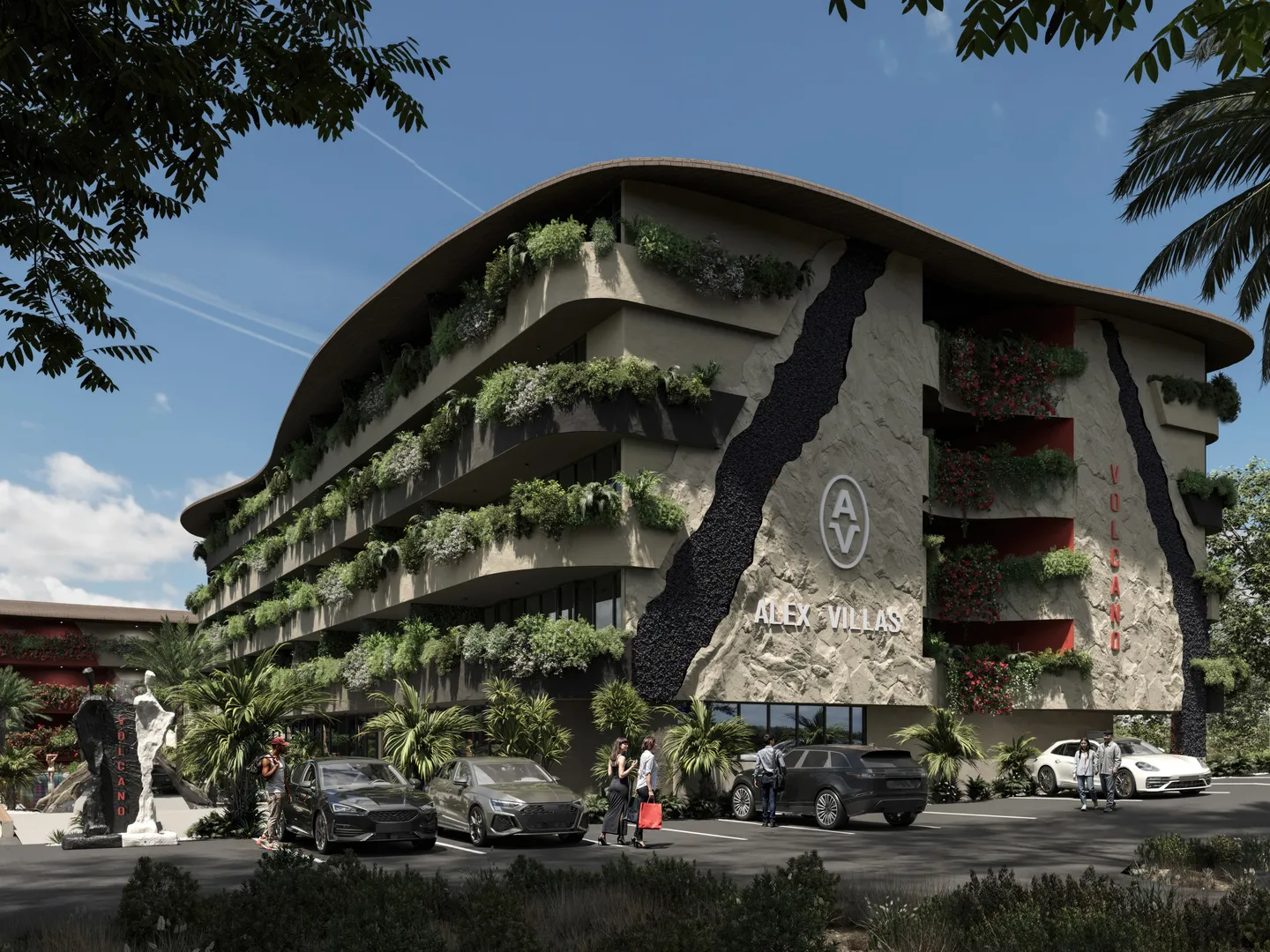
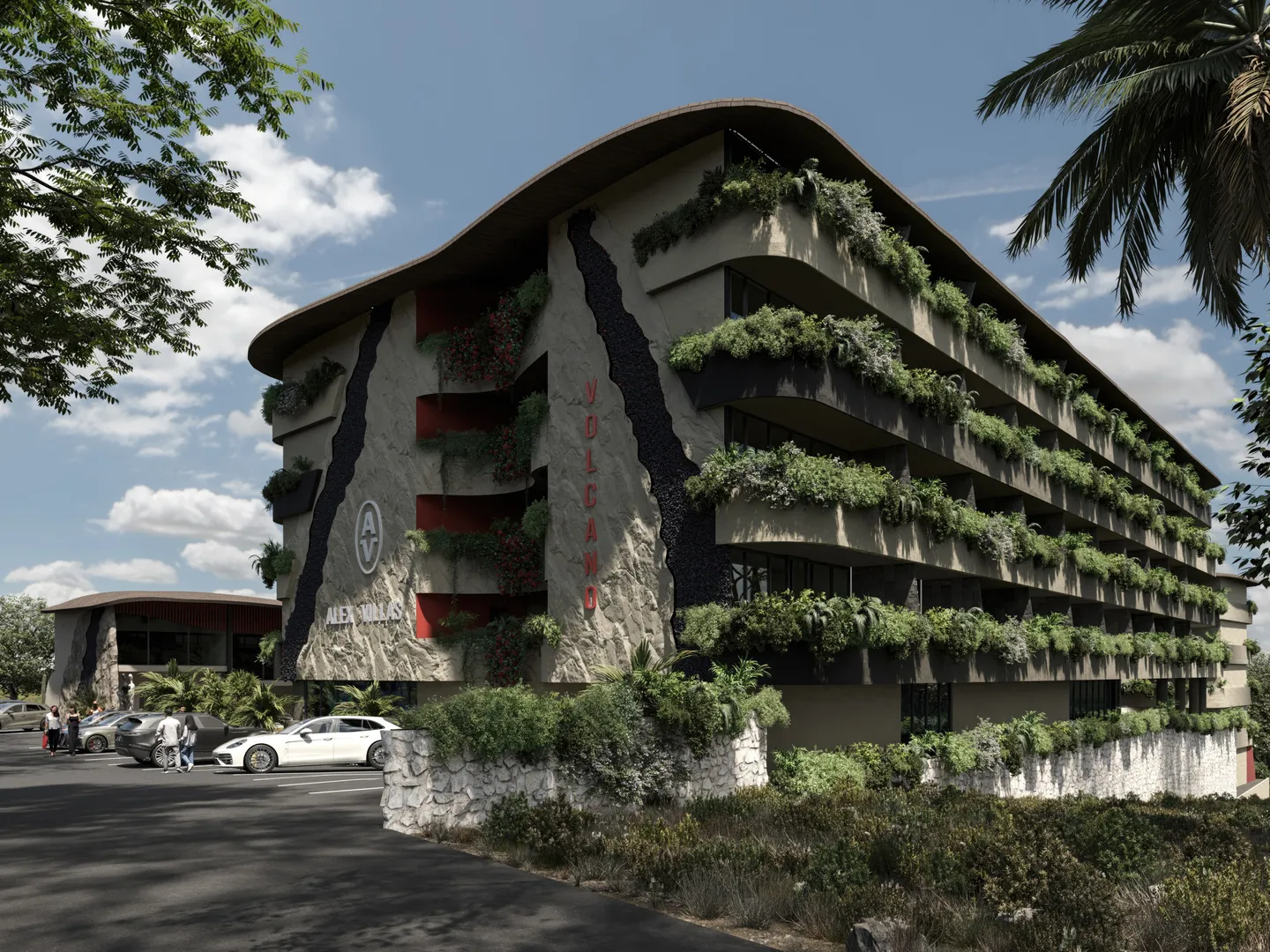
A volcano stands at the centre of this place — a building that works like one. The Bukit is the dry south of an island raised by eruptions, with no volcano of its own. Here a small sloping plot had to hold 123 homes without becoming a block of flats.
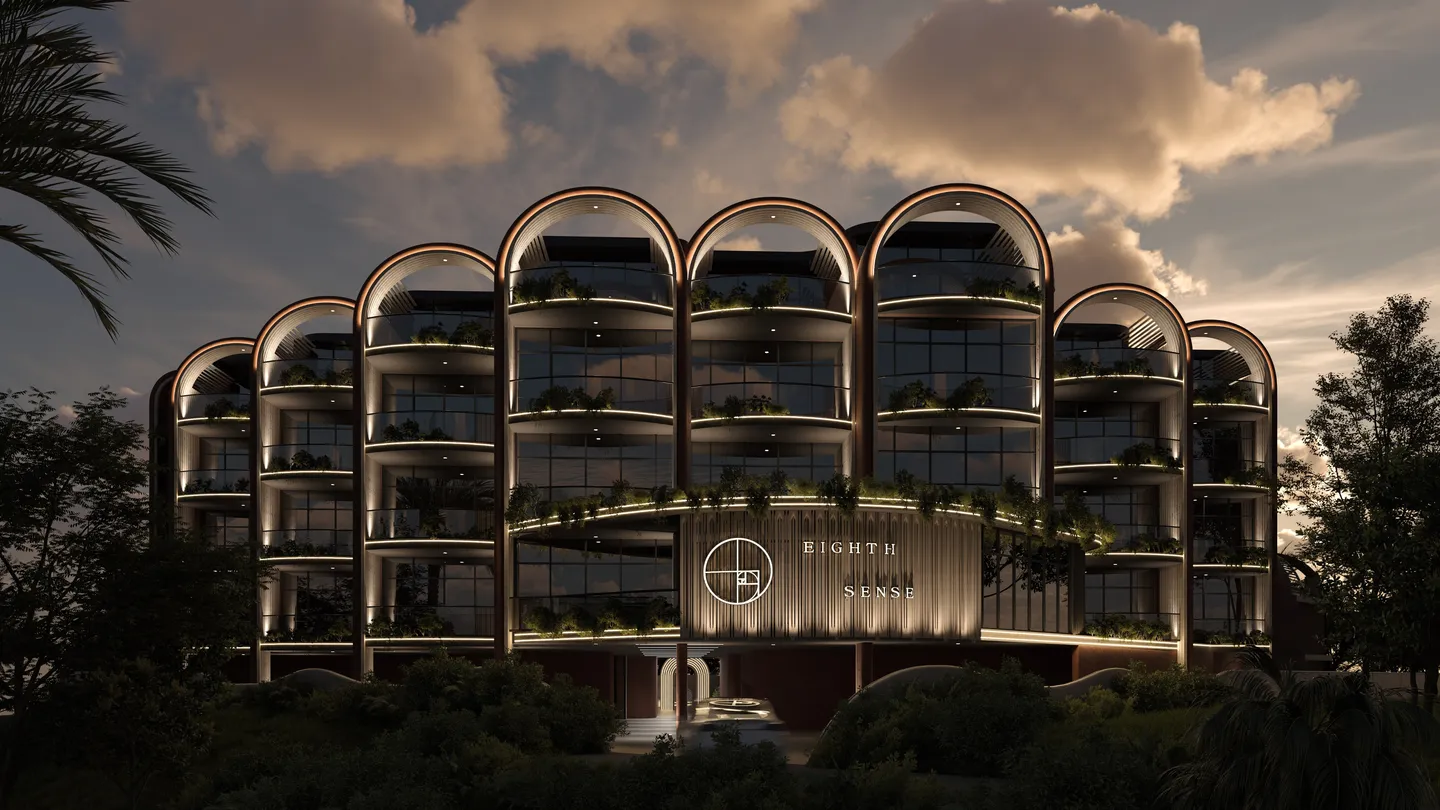
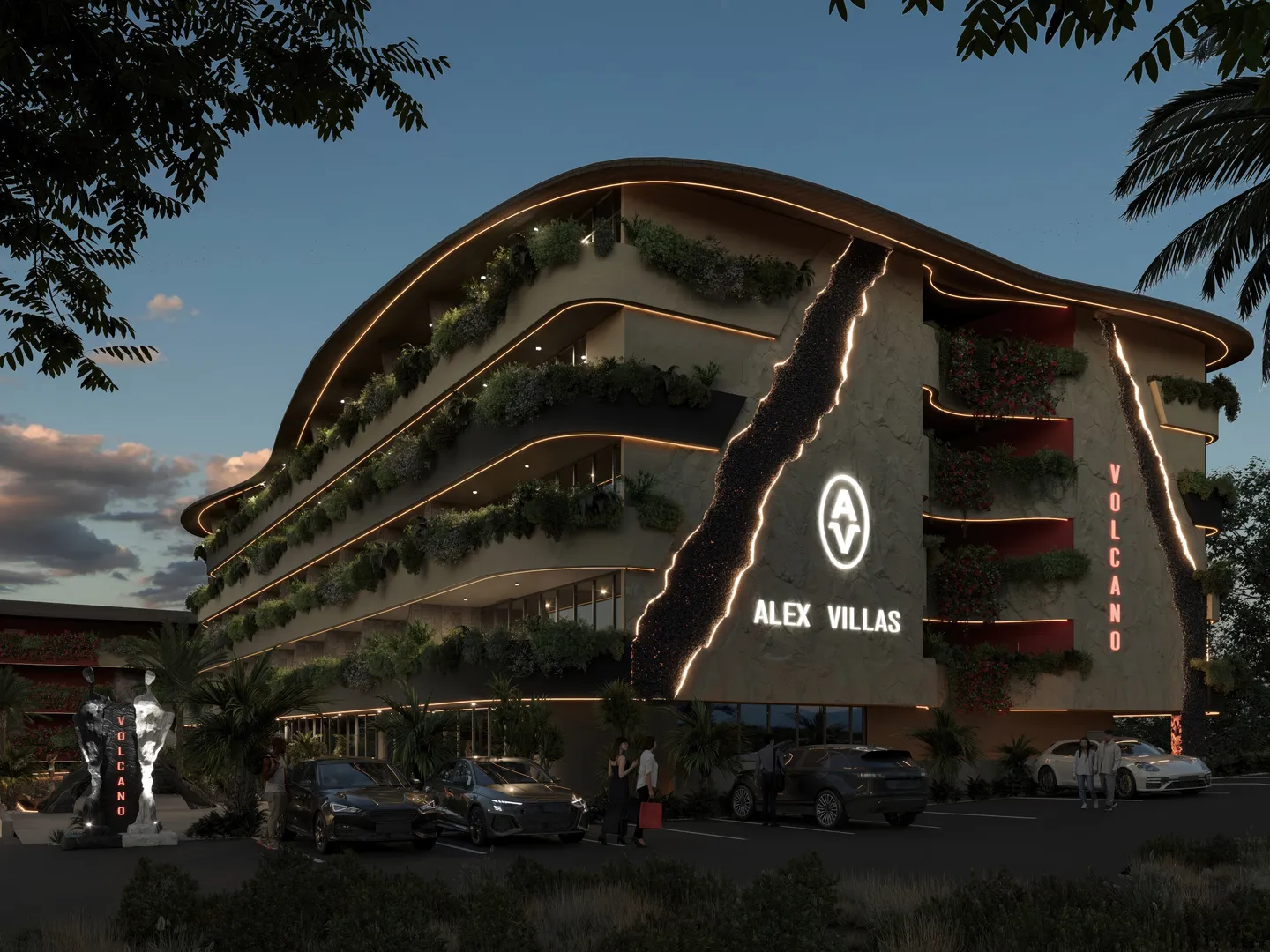
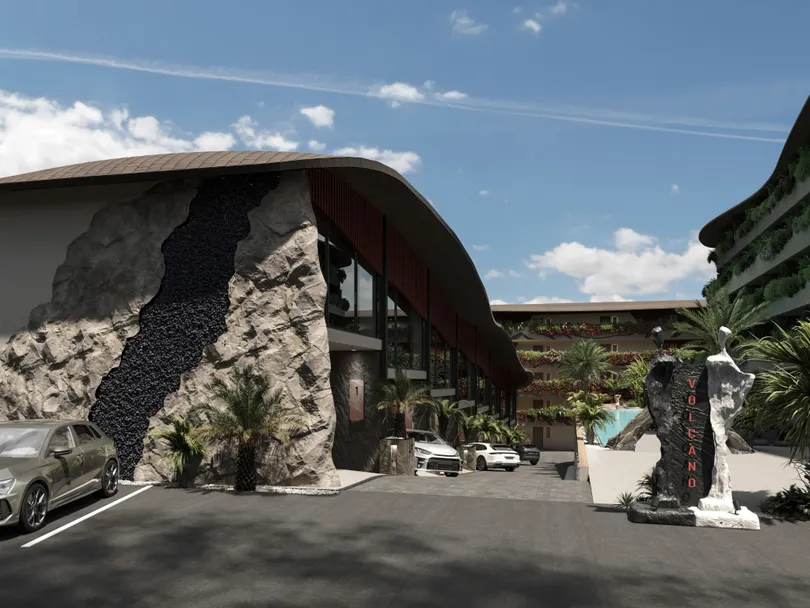
The answer is geology: pale rock split by a seam of black lava, green slopes that step back, a crater at the core — an atrium open to the sky — and a lake at the foot. By day the green softens the stone; at dusk lines of light run along the floors like cooling lava.
The story continues below.
- Type:
- Residential
- Location:
- Bukit, Bali, Indonesia
- Project year:
- 2024
- Site area:
- 3,816 m²
- Total area:
- 8,895 m²
A Volcano Made of Rooms
Concept
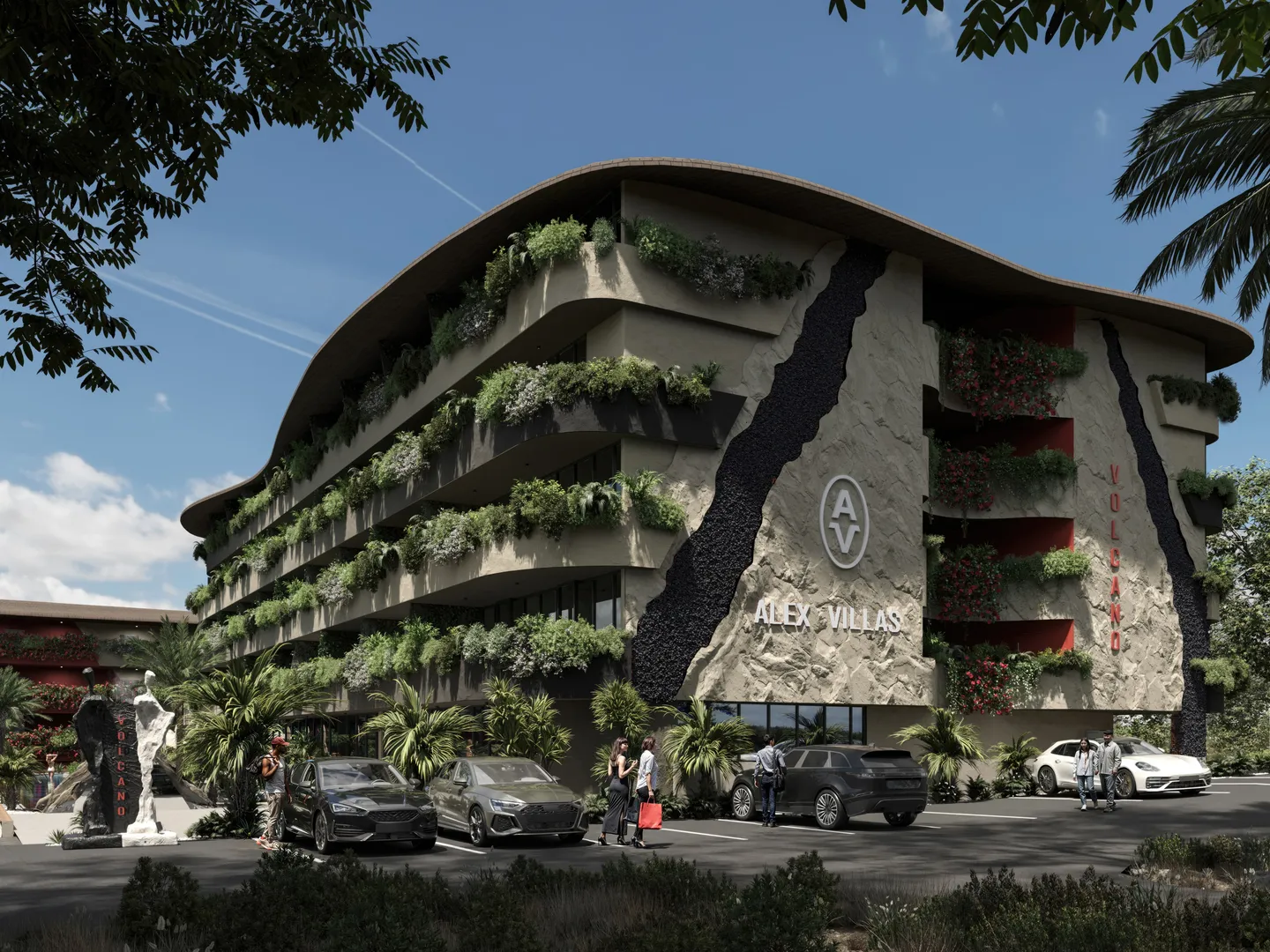
The ninth Alex Villas complex needed a face, and the island offered its oldest. Volcanoes made Bali; black stone lies under most of it. The Bukit is the exception: a dry limestone shelf with none of its own. So the building brings one: a heavy body of pale rock split top to bottom by a seam of black lava, green on its slopes.
The logic goes past the facade. A volcano is a mountain with a hole in it, and so is the building: an atrium open to the sky — the crater — with rooms around it like the walls of a cone. Everything else follows: roofs that rise and fall like a ridge, light in cracks rather than lamps, water at the foot. Each decision answers one question: what would a volcano do here?
Three Slopes, One Valley
Architecture
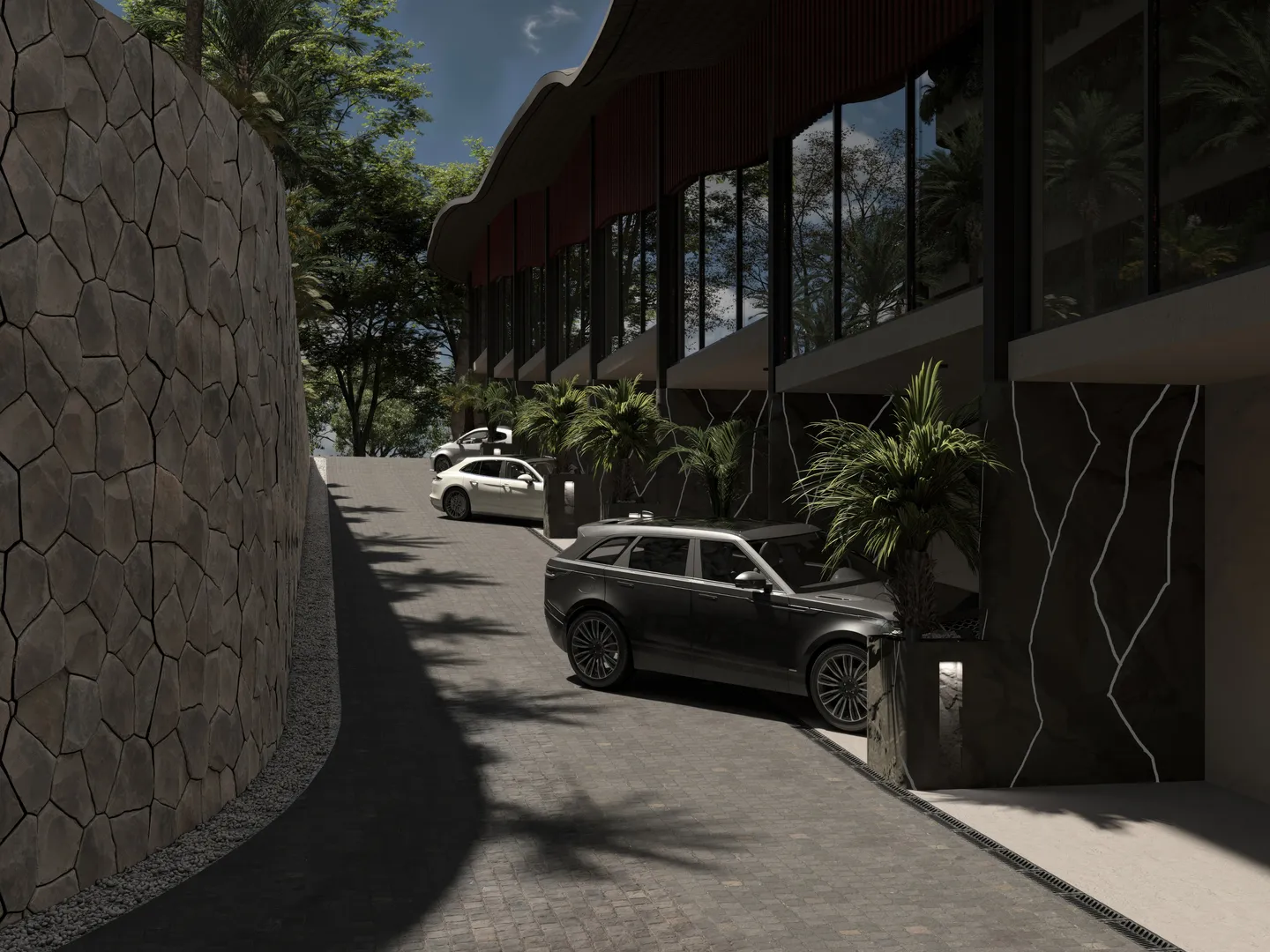
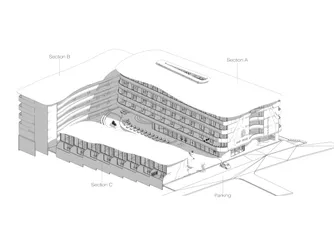
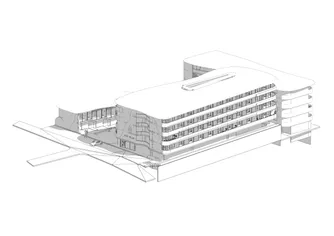
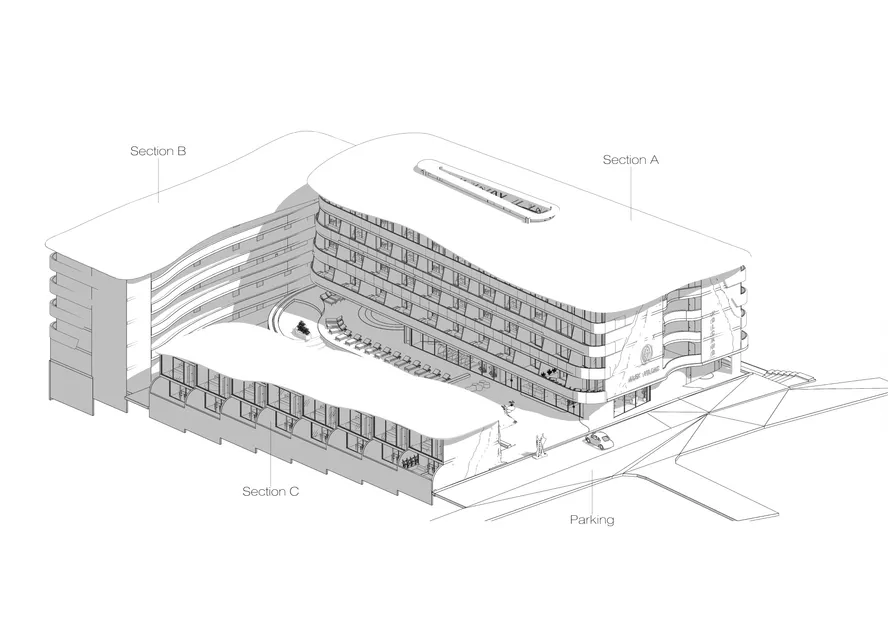
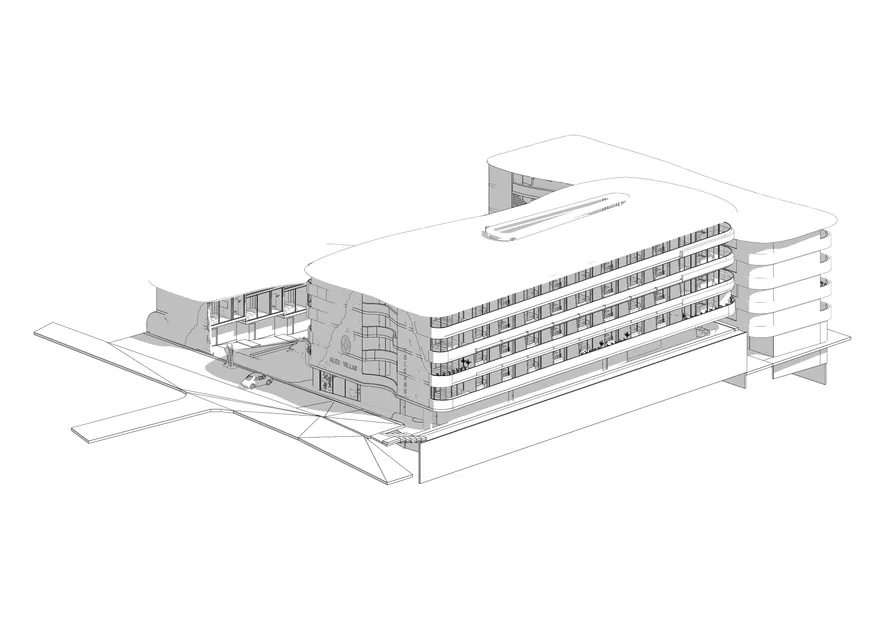
The plot is small and tilted: 74 by 44 metres, dropping almost five metres east to west. Three buildings take its edges. The main building, the volcano itself, lies along the north; a lower, quieter block of flats holds the west, its ground floor five metres down, where the land is lowest; eight villas line the south under one rolling roof. Visitors' cars stay on the east boundary; the villas' drive drops below the pool deck behind a rock wall, unseen.
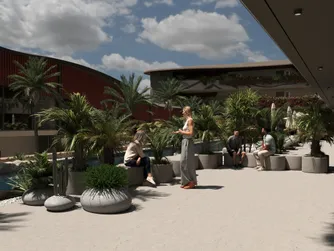
Between them lies the valley: a sunlit courtyard with a long pool on its floor — the lake at the foot of the volcano. All three roofs curve like a ridgeline against the sky; from the street the complex reads as one hill, not three buildings.
A Crater Open to the Sky
Architecture
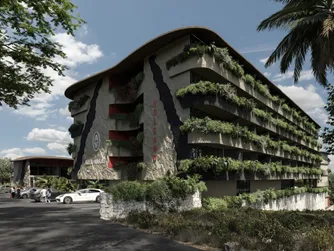
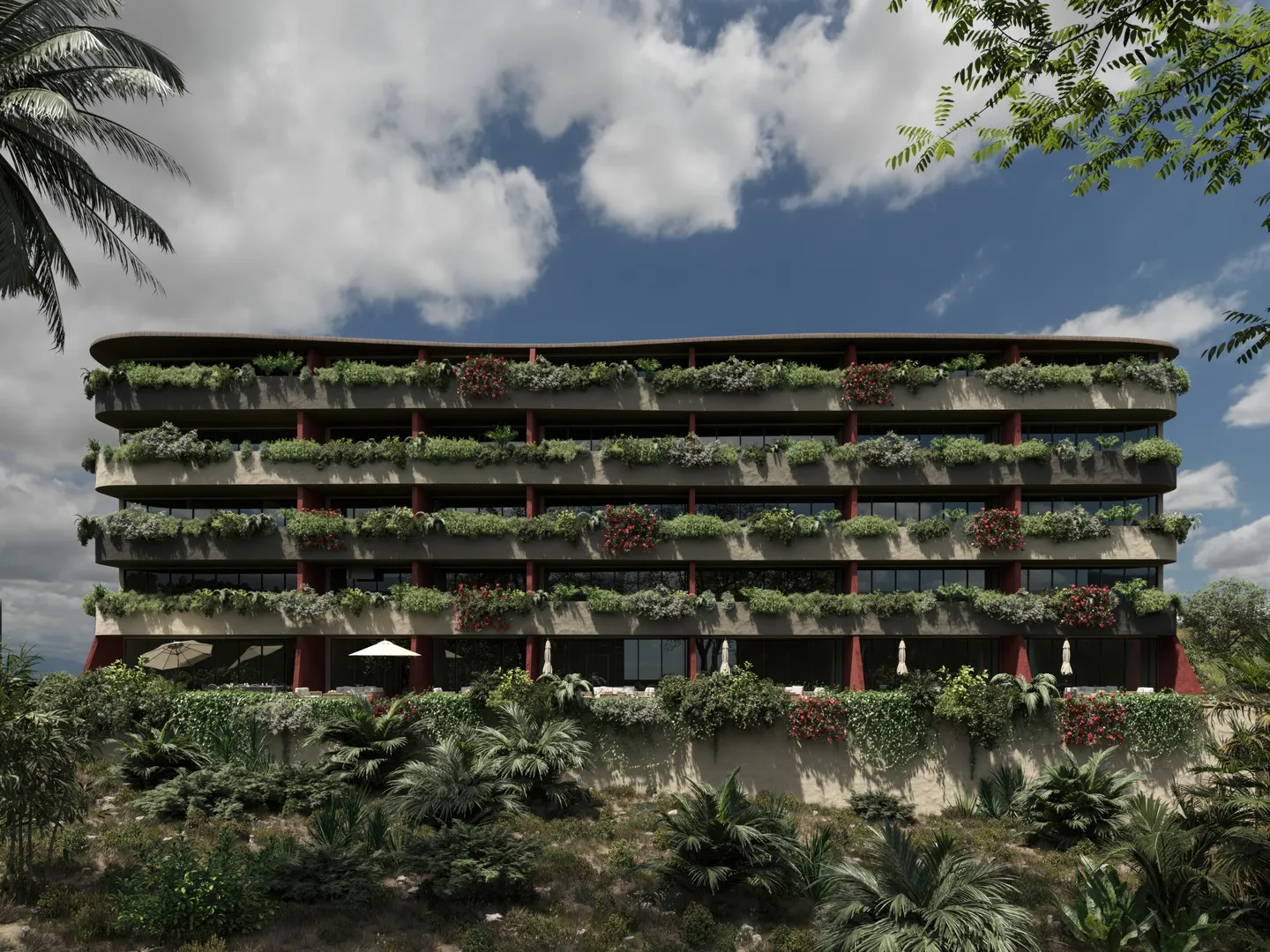
Inside the volcano is the crater: an atrium through all five floors, open through the roof, a long slot of daylight in the middle of the building. Twenty homes ring it on each level, mostly studios of twenty-six square metres, each with a balcony. The balconies are the slope: deeper at the bottom, shallower near the roof, so the facade steps back like a hillside, and every ledge is planted.
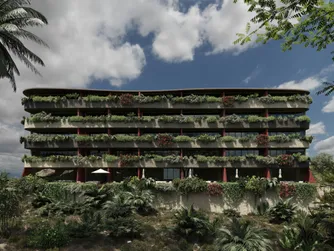
From inside a studio, the effect is simple. The glass wall opens onto a private strip of garden; beyond the plants, the courtyard and the palms; the neighbours above and below hidden by leaves. On the courtyard side the recessed walls are deep volcanic red, and the balcony beds spill flowers against it.
Eight Steps Down the Hill
Architecture
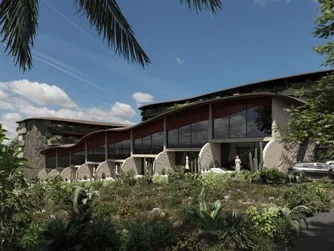
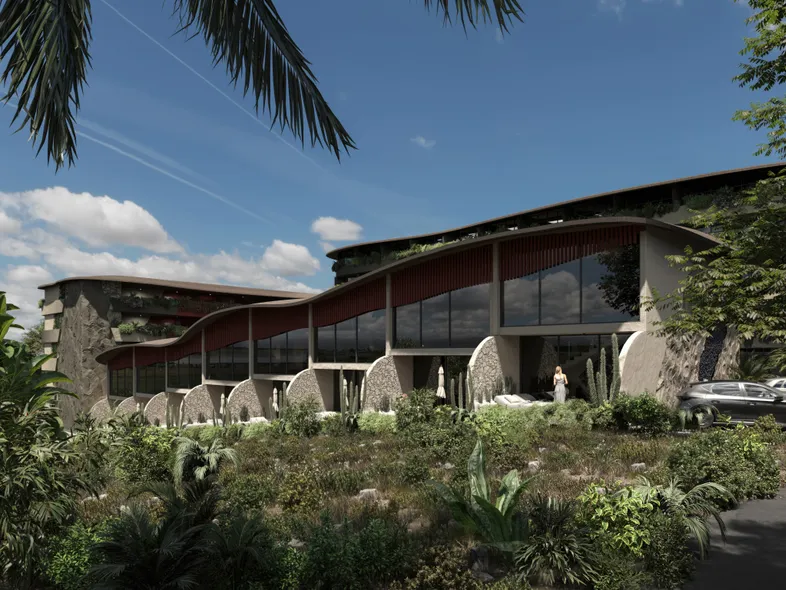
The villas follow the ground along the southern edge: eight two-storey houses, each a step below the last, so the row drops almost five metres end to end. One rolling roof covers them all; under it a band of glass behind red vertical fins, and below that a ground floor of stone arches, as if cut from rock.
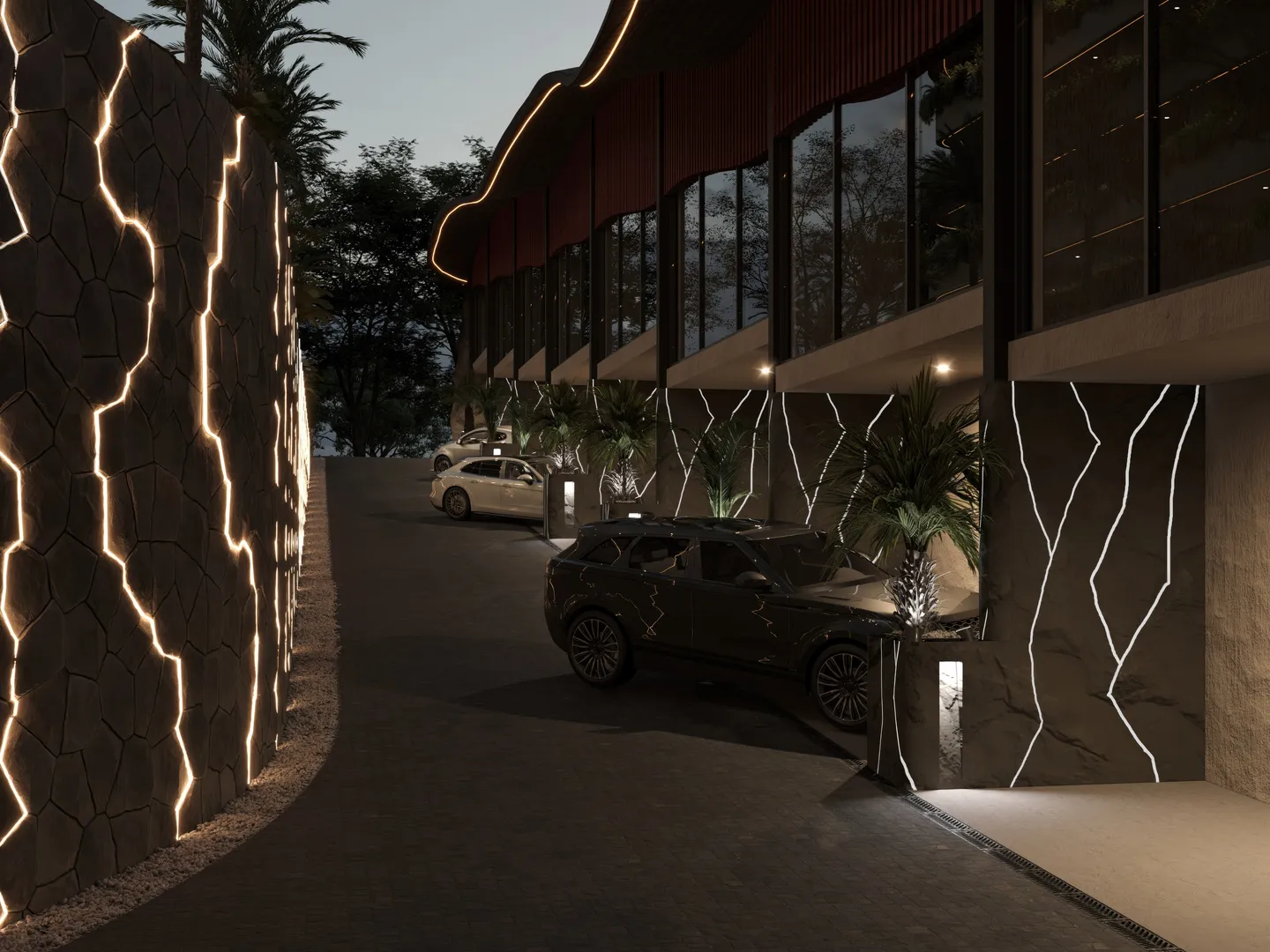
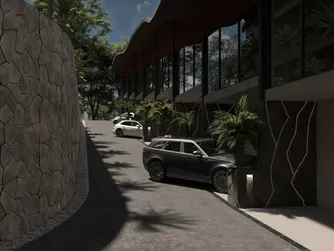
Each villa is a small vertical house. Downstairs, the living room and kitchen open onto a terrace with its own pool; upstairs, two bedrooms with their own bathrooms. Each car waits behind a stone pillar bearing the villa's number, down a drive between rock walls. To the south the garden is dry and spiky — cacti, agaves and grasses between stone parapets, the vegetation of a lava field.
Entering Through the Seam
Experience
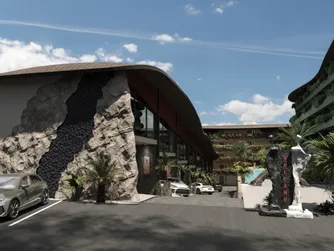
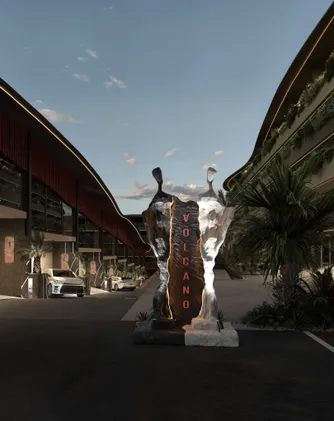
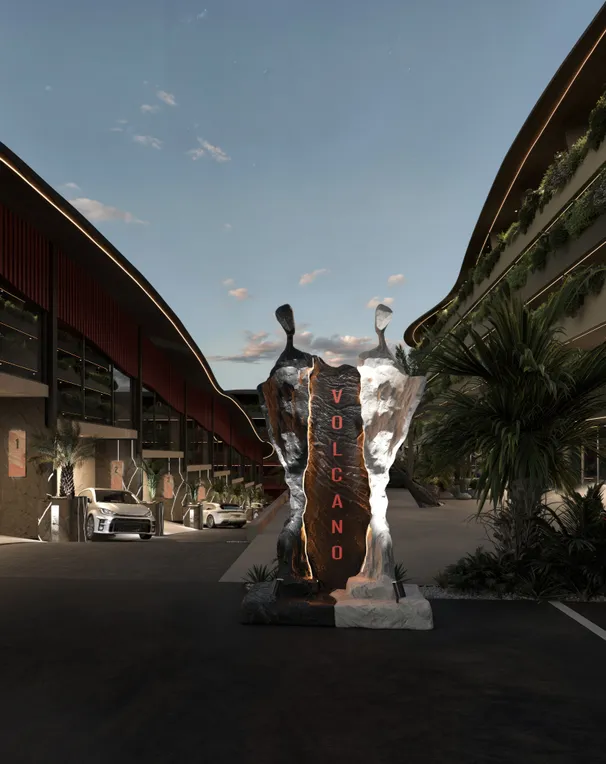
Arrival is from the east, where the volcano shows its steepest face: a wall of sculpted rock with a river of black lava stone running down it, the name of the complex cut into the surface, and at its foot a sculpture of two figures — one dark, one light — split by a glowing fissure. Cars stop here. From here on, everything is on foot.
The lobby opens straight into the ground floor, the living room of the whole complex: a café that works as a coworking space in the morning, a gym behind glass, a kitchen and bar, and beyond them the courtyard and water. Nobody crosses a car park to get to a coffee or the pool; front door to deep end takes under a minute.
The Lake at the Foot
Experience
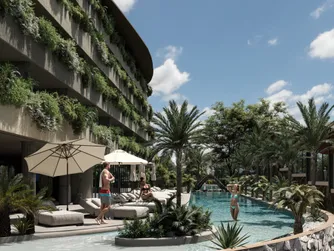
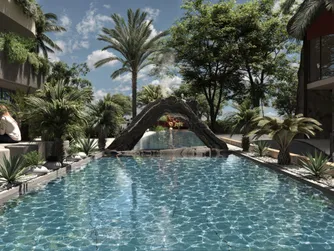
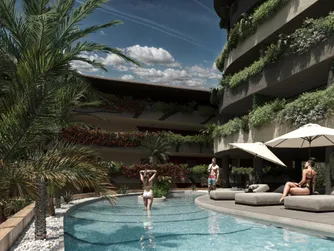
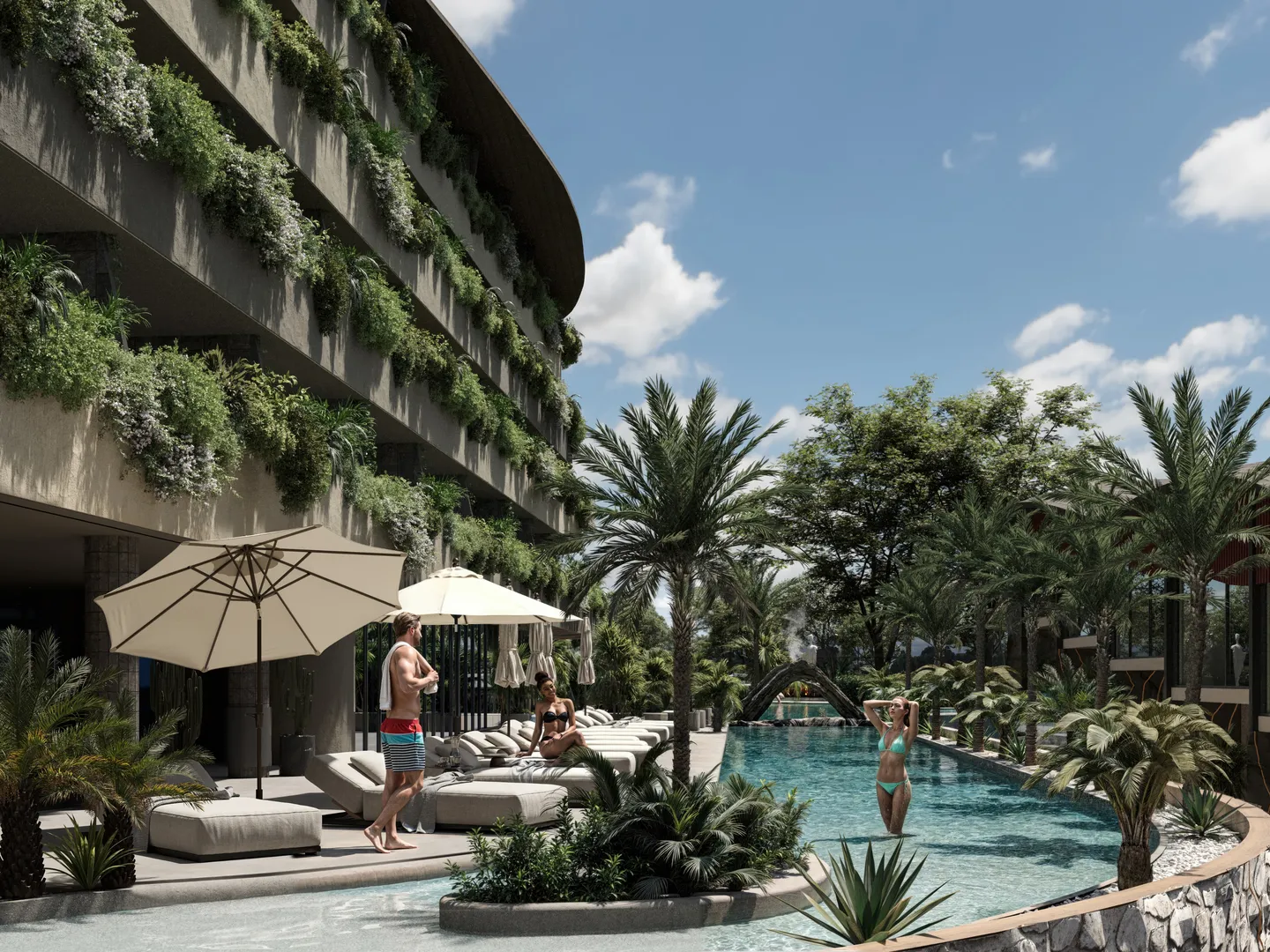
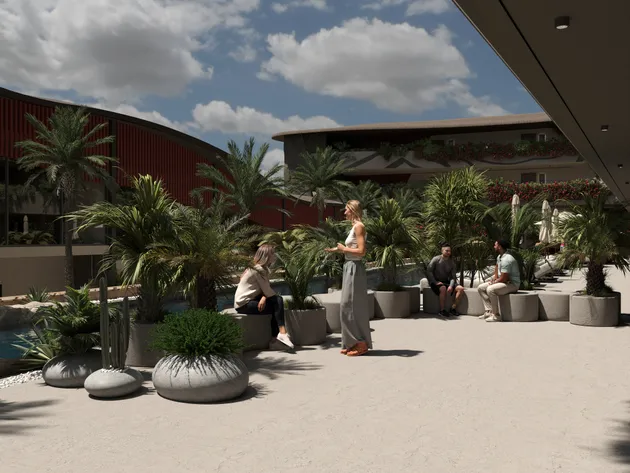
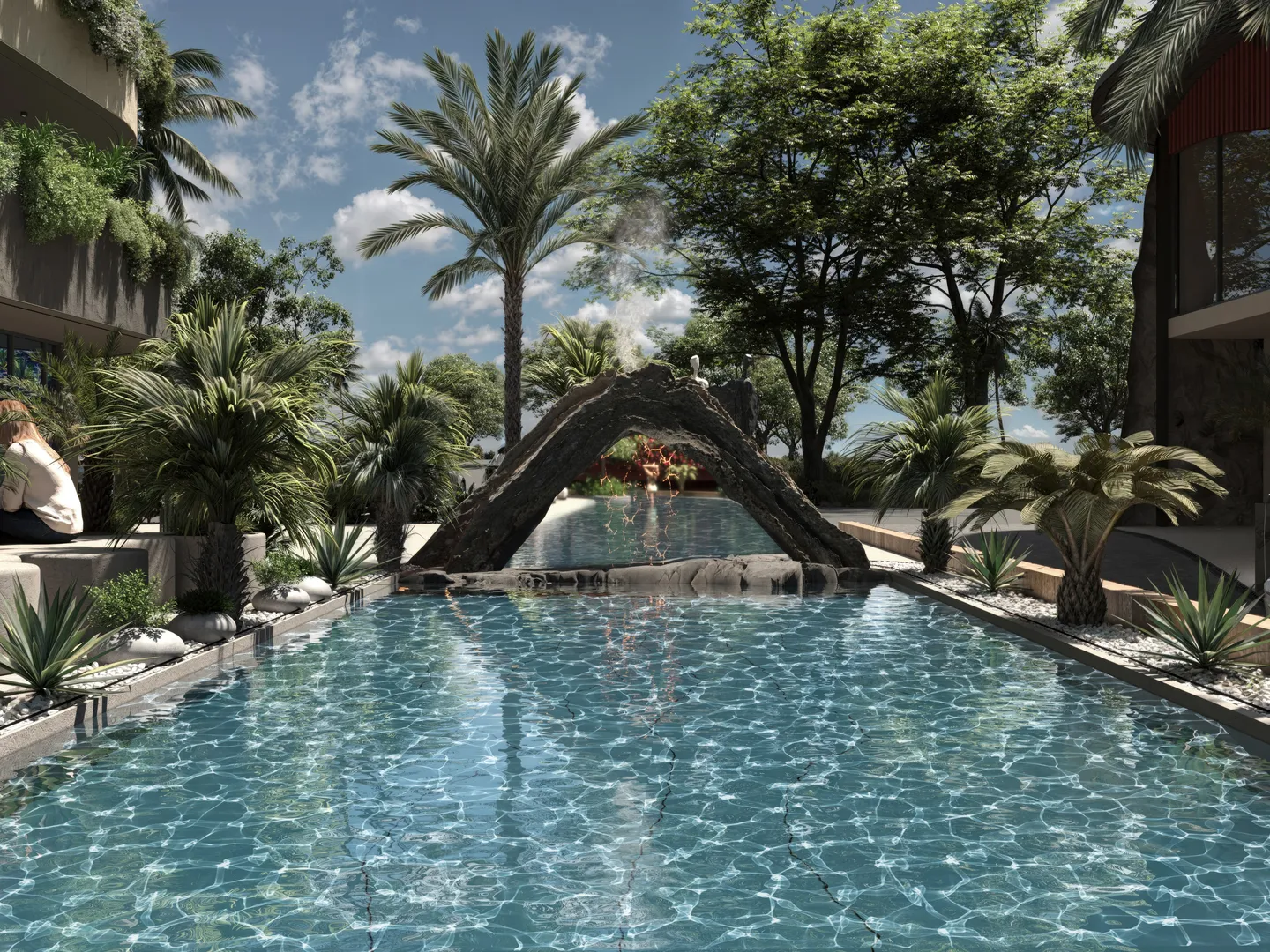
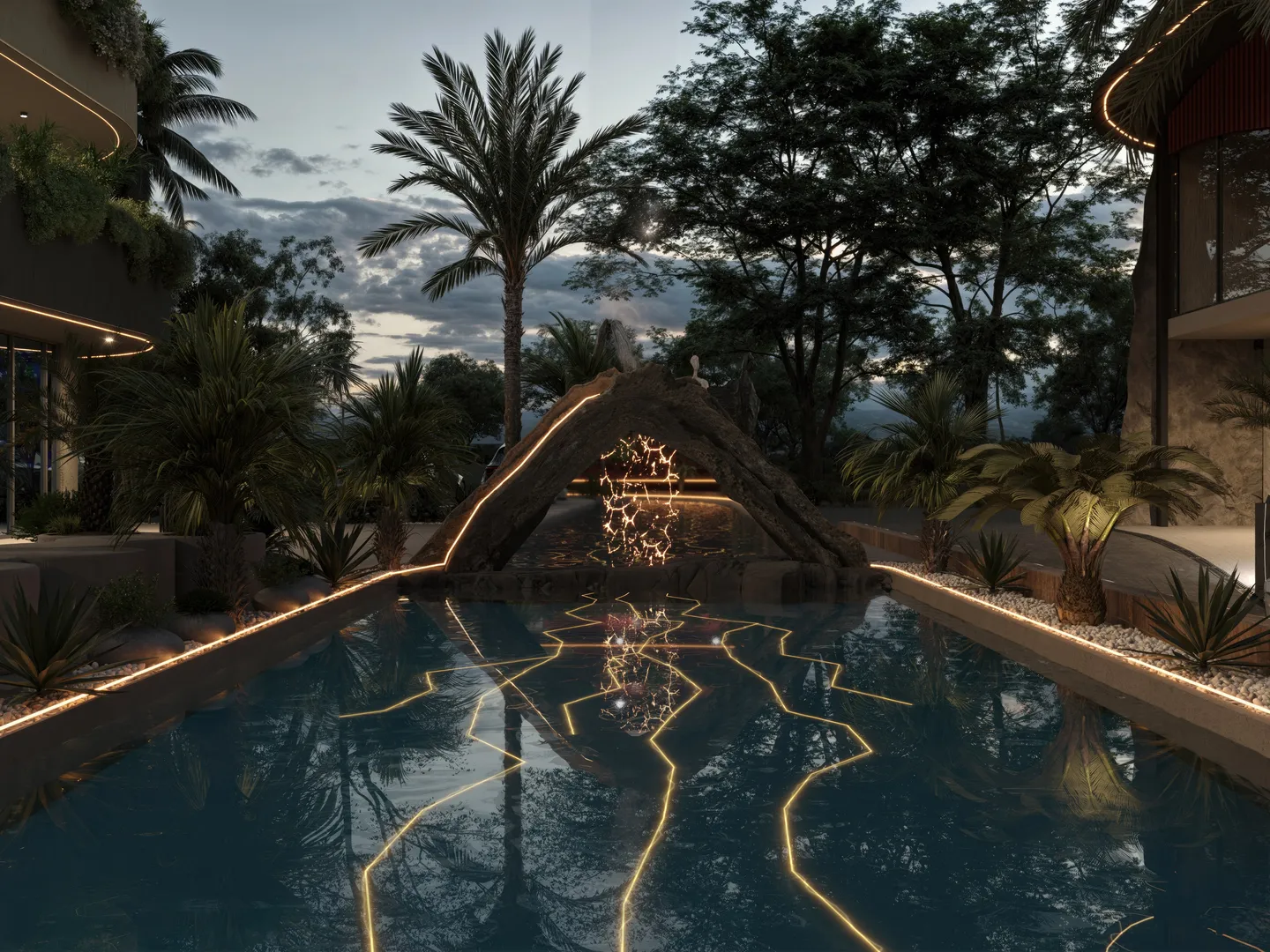
The pool runs the length of the courtyard, a long blue line between the volcano and the villas. Halfway along it, a stone arch rises out of the water like a small volcano, cracks glowing inside it and a plume of mist drifting off its top; swimmers pass beneath. At one end the water is warm — a jacuzzi under the palms; beside it, an ice bath for the brave. A bar sits at the head of the pool, and sunbeds line its shaded side under the deep balconies.
The day here has a rhythm. Morning laps before the sun clears the roofs; noon under umbrellas and palms; late afternoon on the stone benches among the agaves, when the courtyard fills with voices from every balcony above.
Green That Climbs
Landscape
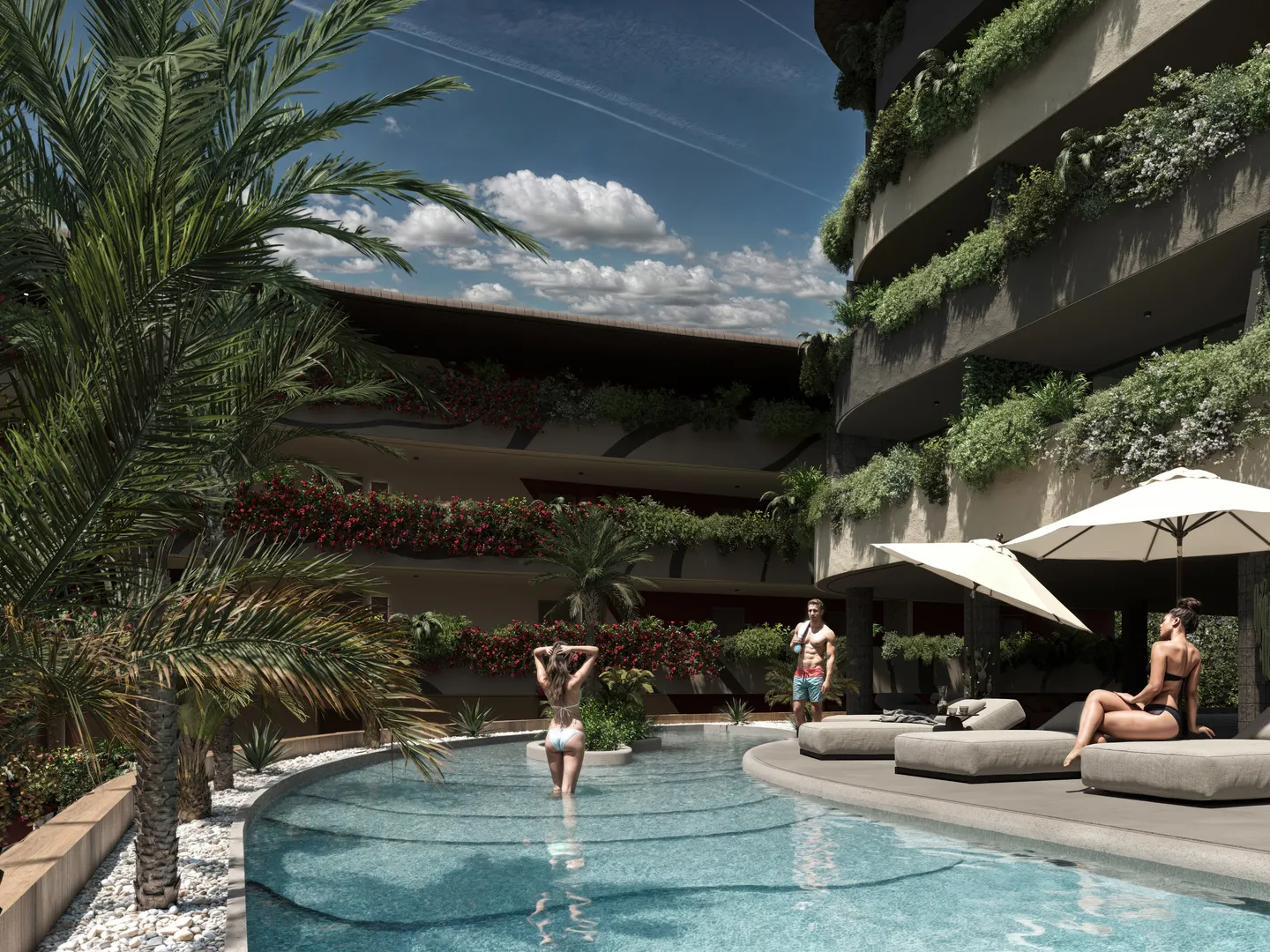
On a plot this tight there is little room for a garden on the ground, so the garden goes up. Every balcony in the main building carries a planted bed along its edge; seen from the courtyard, the five floors dissolve into hanging green with only a line of slab between them. Below, palms rise from the pool deck, agaves and pebbles edge the water, and stone benches sit among planters shaped like boulders.
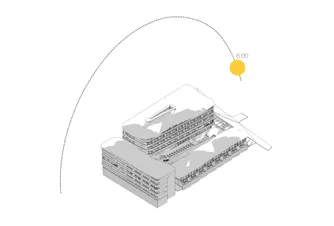
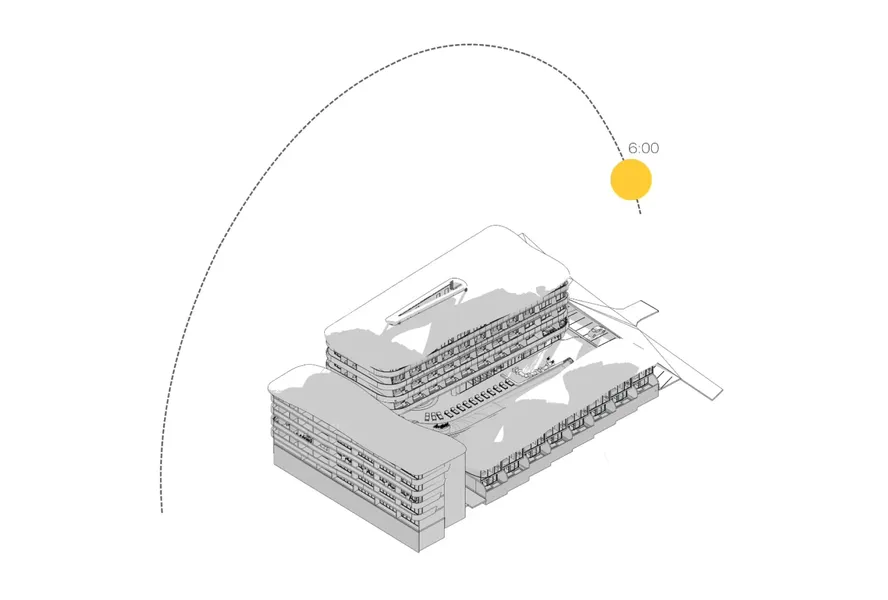
The shade is planned around the sun's path at both solstices: the pool sits where it has light for most of the day, and the sunbeds sit where the main building casts its band of shade. Greenery here is the surface of the volcano, and the architecture is what it grows on.
Stone, Ash and Bloom
Materiality
The palette is a volcano's. Pale sculpted rock for the big walls, rough enough to cast its own shadow at noon. Black lava gravel in the seams that split it. Deep red on the courtyard walls and the villa fins — the colour of the inside of a volcano. A bronze-brown roof rolling over it all like a cooled crust. And green wherever the slopes allow.
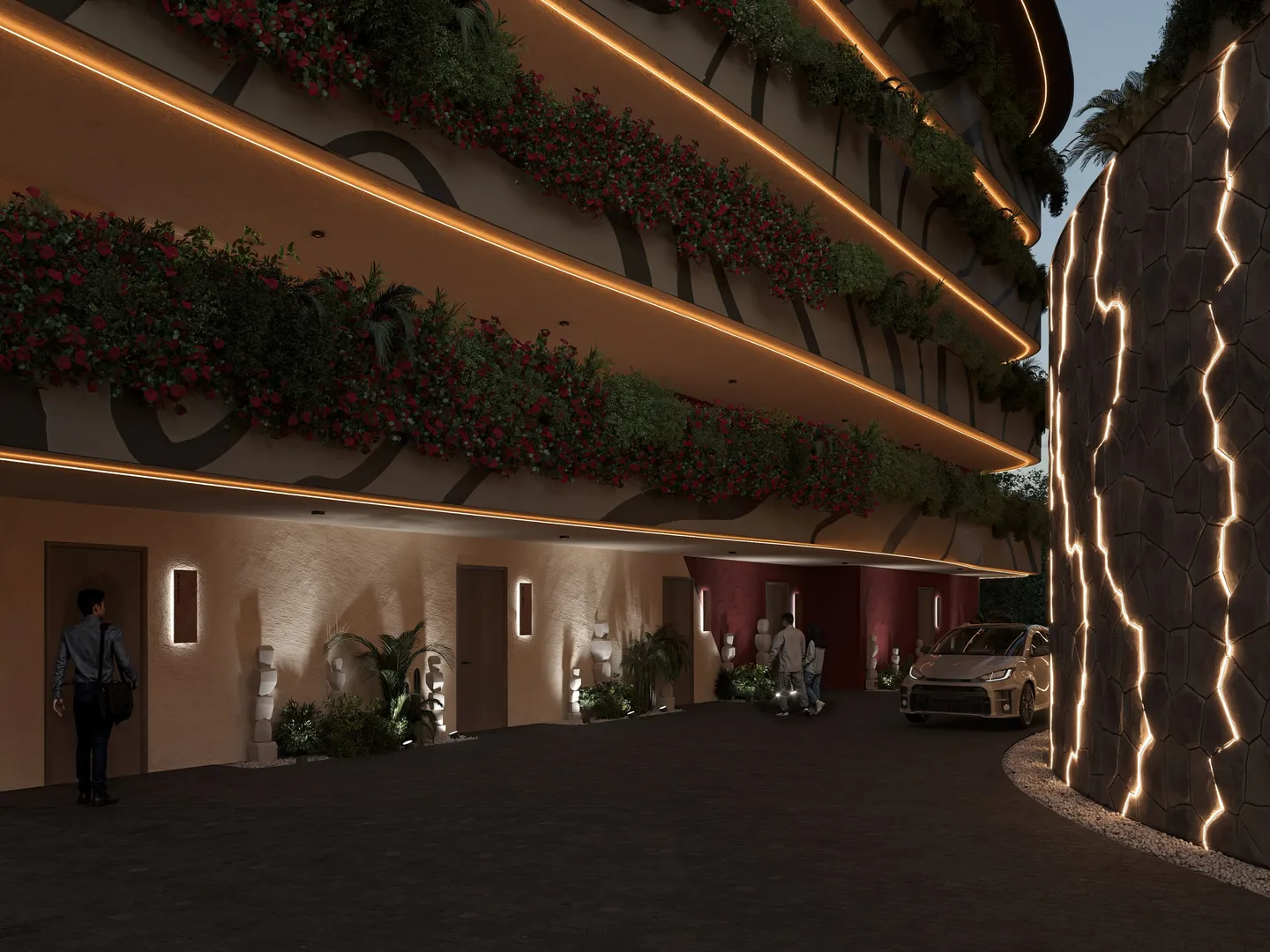
The materials serve the climate as much as the story. Stone stays cool under the overhangs; deep balconies and planted ledges keep direct sun off the glass for most of the day; the retaining walls along the drive are laid in polygonal basalt that holds the slope and gives back the day's warmth after dark. Under the hand, nothing here is smooth.
When the Lava Lights Up
Experience
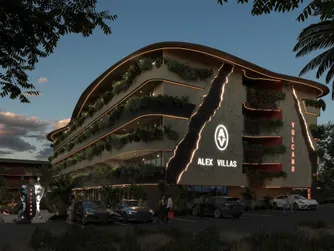
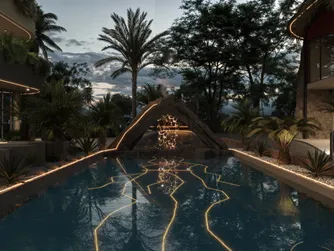
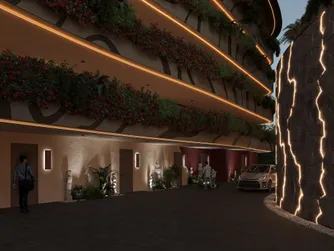
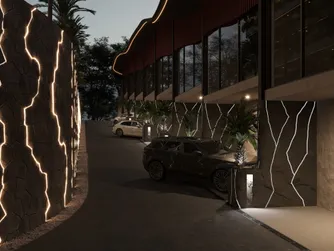
After sunset the volcano changes state. A line of light runs along every floor edge and draws the building's curves in the dark; the seams in the rock walls glow from within; the villa pillars flicker through their cracks as if still hot. Over the pool the arch's ridge lights up and its reflection breaks on the water — a lava flow you can swim through.
None of it is bright. The light lives in lines and cracks, and the courtyard keeps enough darkness for the palms to stay silhouettes and the sky to show.
“We didn't want a building that looks like a volcano. We wanted to bring a volcano to the Bukit — and make it a place to live.”
— Anastasiia Shalun, Founder & Architect, SAI ARCHITECTS